

1D Wellbore stability (WBS)
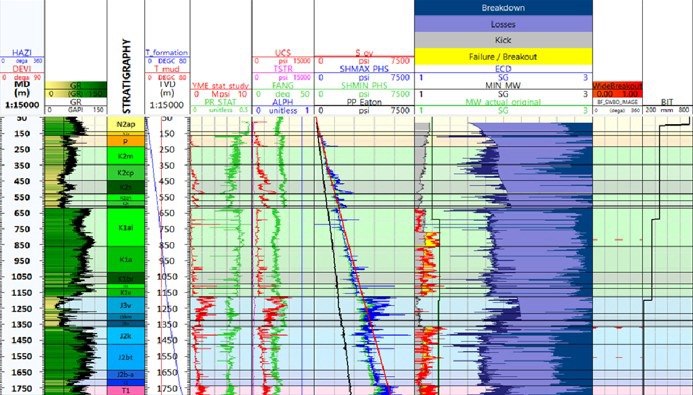
Wellbore stability calculation (WBS) is the result of 1D geomechanical modeling, the purpose of which is to determine the safe drilling mud weight window.
Graphically, the model represents a set of gradients describing various risks during well construction. Insufficient mud density can lead to kick and wellbore collapses and negatively affect drilling and tripping performance, most often resulting in mechanical sticking and tool loss.
Modelling includes calculation of the elastic and strength properties of rocks, as well as the stress profile, based on all available data on the field and nearby wells. Based on the geomechanical model, it is possible to reasonably and safely design a well during the preparatory stage.
Wellbore Stability Calculation
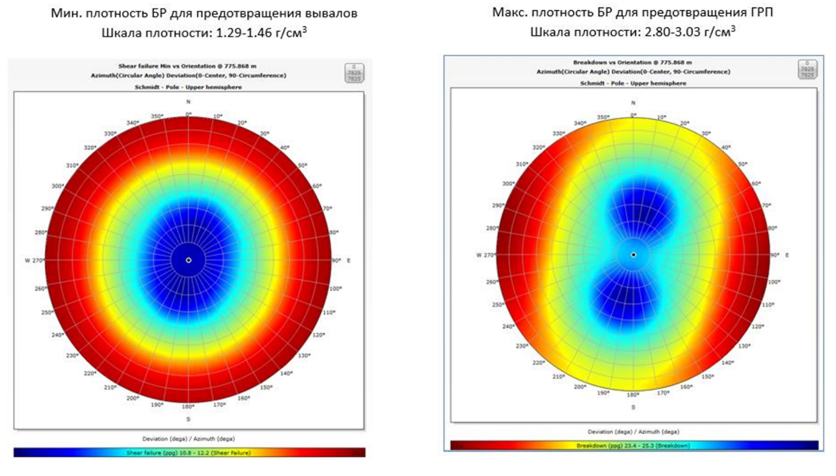
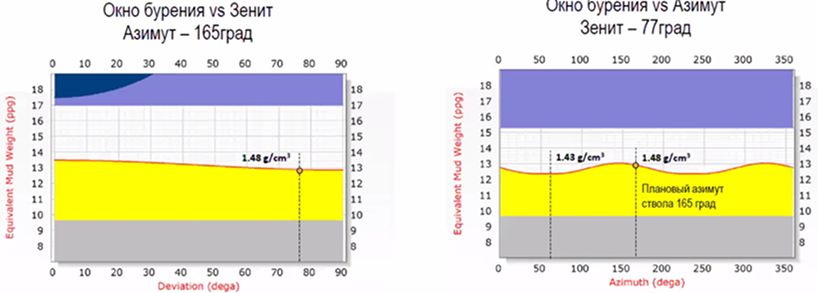
Safe mud density window and drillability conditions directly depend on the wellbore's location relative to the principal stresses of the earth's crust. The role of geomechanics in planning well locations during the basic design phase and trajectories during development involves several stages:
- Determining the stress regime at the site
- Determining the azimuth of the minimum and maximum horizontal stresses
- 1D modeling of planned wells with recommendations for azimuthal direction to expand the safe mud density window
Particular attention is paid to caving-prone intervals and anisotropic rocks, where the risk of caving depends on the borehole's inclination. A common problem in deviated and horizontal wells is borehole collapse in areas with high inclination. A more detailed approach is needed to determine the optimal entrance angle for rocks such as clays, mudstones, coals, and others.