

Geomechanical modeling at the design stage is an important tool for efficient construction.
Hydraulic fracturing optimization
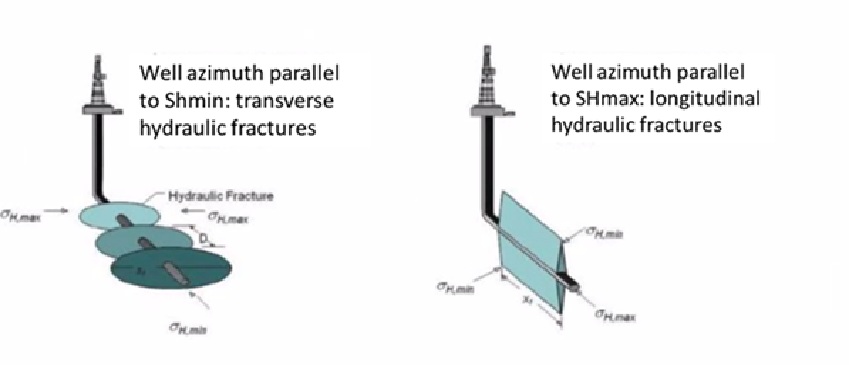
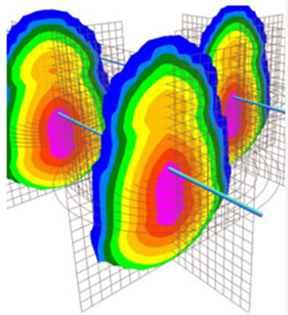
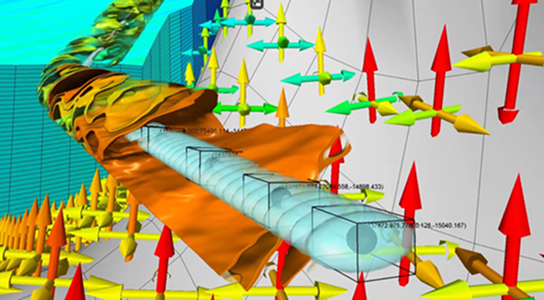
Hydraulic fracturing remains a leading method for enhancing reservoir recovery. Geomechanics parameters are used as input for describing the fracture propagation direction and geometry. Risks associated with a resource-intensive technology like hydraulic fracturing are significantly reduced by knowing the rock's petroelastic properties, stress tensor and reservoir pressure.
Stimservices conducts the following steps in hydraulic fracturing planning:
- Calculation of the elastic and strength properties (Young's modulus, Poisson's ratio, tensile strength, etc.)
- Determination of the stress regime and azimuth of horizontal stresses to determine the direction of fracture propagation
- Analysis of stress barriers
- Analysis of rock fracturing and the risk of uncontrolled breakthrough
- Selecting the hydraulic fracturing interval
- Determining the injection pressure and volumes
- In the case of multi-stage hydraulic fracturing, selecting the optimal distance between stages
- Proppant selection