

HPHT, AHRP and ALRP prediction
Hydrocarbon production often involves drilling in zones of abnormally high formation pressure (AHRP), which theoretically represents a significant difference from hydrostatic pressure, with an anomaly coefficient greater than 1.10.
Drilling in AHRP zones inevitably carries the risk of kick, blowouts and often the abandonment of the entire well and the temporary shutdown of the drilling rig. Eradication measures often result in lost circulation or stuck, which entail significant financial and time costs. These characteristics of the field must be considered in advance using high formation pressure forecasting methods.
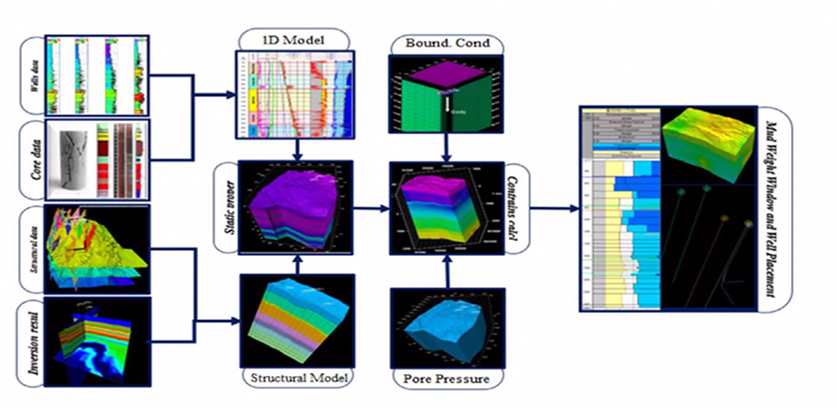
StimServices assessing AHPD zones in complex way through:
- comprehensive data audit, including analysis of geological and tectonic features of the field; all seismic data, and logging of adjacent wells and fields
- determining the causes of abnormally high pressure
- refining the reservoir pressure calculation methodology in 1D/3D modeling using acoustic, seismic, density, and other data
A comprehensive picture of the distribution of reservoir and pore pressures throughout the wellbore and field enables accurate well design and drilling mud density determination, as well as the selection of reservoir pressure monitoring methods, taking into account other reservoir characteristics.